

Case #006 • Evaluating Investment Opportunities
Why This Matters
A respected colleague mentions an investment opportunity. Access is limited. People you know and trust are already involved.
The first instinct is to ask whether the person can be trusted.
That’s a reasonable question. It’s also not the question that determines whether the investment is a good one.
The Diagnosis
The reasonable first question is:
Can I trust this person?
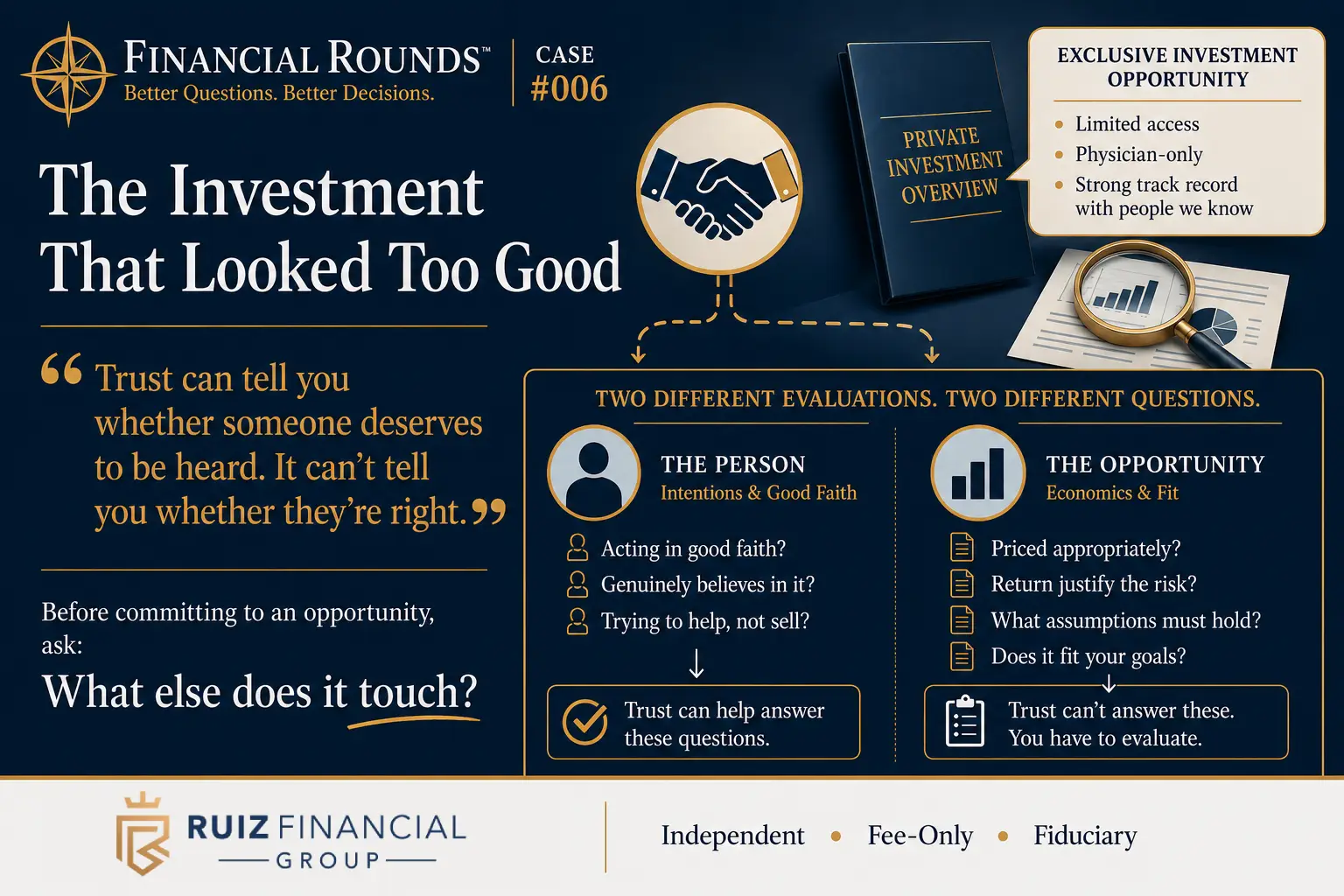
Trust can answer real questions. Is this person acting in good faith? Do they genuinely believe in the opportunity? Are they trying to help, not sell?
Trust cannot answer other questions. Is the investment priced appropriately? Does the expected return justify the risk? What assumptions have to hold true for this to work? Does it actually fit your goals?
Those aren’t questions about the person bringing the opportunity. They’re questions about the opportunity itself, and trust was never designed to answer them.
The better question is:
What job is trust actually doing here, and what is it being asked to answer that it can’t?
The Treatment
Separating these two questions starts with treating them as genuinely different evaluations, not two ways of asking the same thing.
Trusting the person is about their intentions and good faith. Evaluating the opportunity is about the numbers, the assumptions behind them, and whether it fits your own objectives, regardless of who brought it.
If asking for documentation, time to review, or a second opinion feels uncomfortable because the opportunity came from someone you trust, that discomfort is worth noticing rather than dismissing.
Urgency and exclusivity are worth watching for specifically, not because they make an opportunity bad, but because they tend to make it easier to skip the second evaluation and stop at the first one.
Practical Takeaways
- Separate whether you trust the person from whether the opportunity holds up on its own.
- Ask what assumptions have to be true for the investment to work, independent of who’s presenting it.
- Notice when urgency or exclusivity is substituting for the diligence you’d normally want.
Bottom Line
Trust can tell you whether someone deserves to be heard. It can’t tell you whether they’re right.
Before committing to an opportunity, ask:
What else does it touch?