

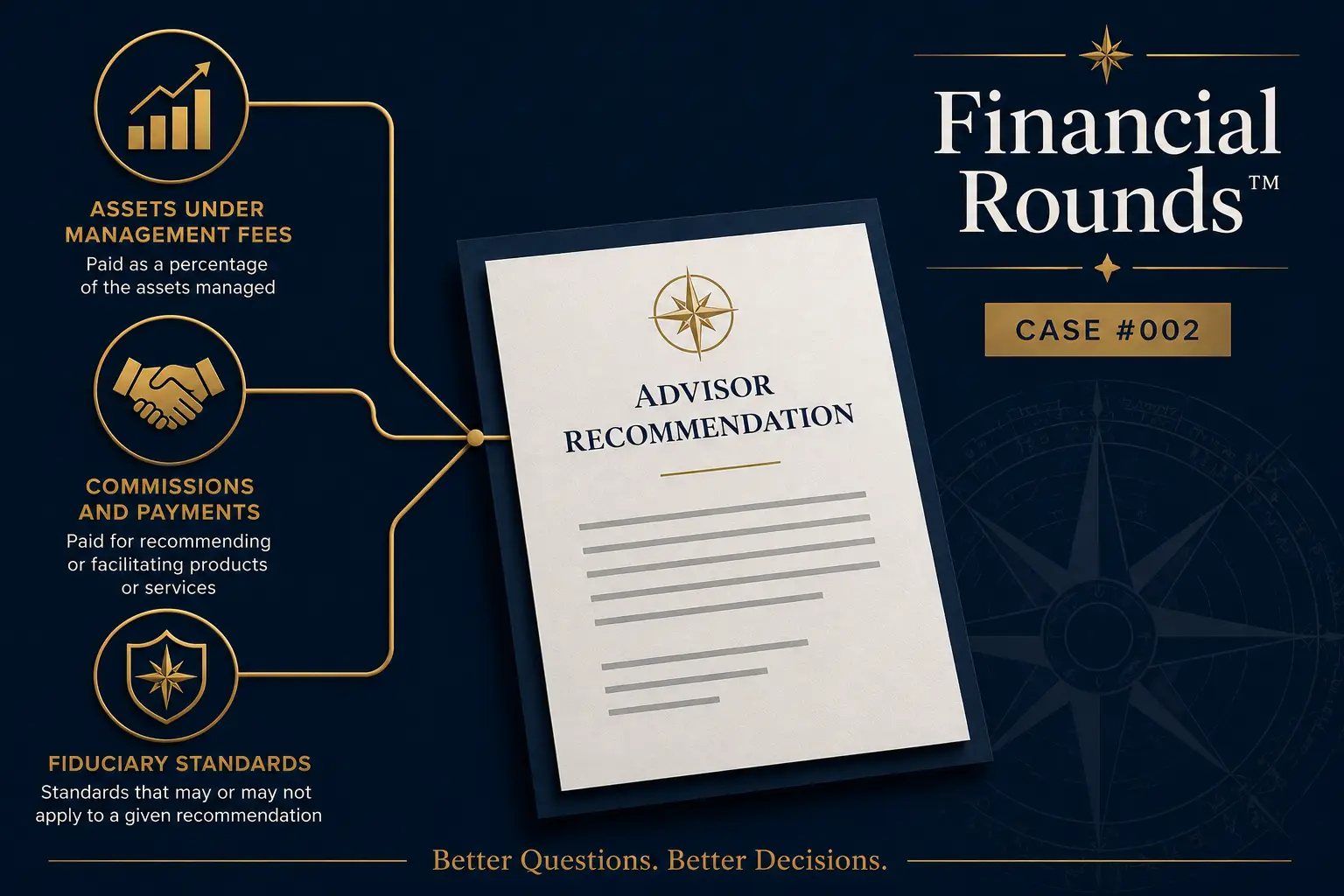
Case #002 • Choosing Financial Advice
Why This Matters
Anyone researching financial advisor compensation eventually runs into the same question: is this person fee-only?
It’s a reasonable thing to ask. How an advisor gets paid can influence the recommendations they make, and a great deal of useful writing exists on the differences between commission-based, fee-based, and fee-only compensation.
But “are you fee-only?” is a yes-or-no question, and yes-or-no questions can create a false sense of resolution. A reader who gets a satisfying answer may stop asking anything else when the compensation structure was never the full picture to begin with.
The Diagnosis
Fee-only compensation removes a specific kind of conflict: an advisor being paid to sell a particular product. That’s a meaningful thing to remove.
It doesn’t remove every incentive.
An advisor paid a percentage of assets under management has incentives tied to the amount of assets they manage. That doesn’t mean recommendations are inappropriate or that advice is compromised. It simply means the compensation structure, like every compensation structure, creates incentives that are worth understanding.
The reasonable first question is:
Are you fee-only?
The better question is:
How are you compensated, what incentives come with that, and how might they influence the recommendations I receive?
The Treatment
Every compensation model creates incentives. The question isn’t whether incentives exist, but whether you understand them well enough to evaluate the advice you’re receiving.
A few questions worth asking any advisor, regardless of how they’re paid:
How does your compensation change based on what I decide to do? If the answer is “it doesn’t,” ask what would have to happen for that to stop being true.
If a recommendation involves moving money into something the advisor manages, ask what the recommendation might have looked like if that option weren’t on the table.
Ask whether the recommendation is being made under a fiduciary standard, and don’t hesitate to ask what that means in your particular relationship. Understanding when and how an advisor is obligated to act in your best interest can be just as important as understanding how they’re compensated.
None of these questions are uncomfortable to ask an advisor who has good answers for them. That, itself, is a useful signal.
Practical Takeaways
- Ask how compensation changes based on what you decide, not just what category of advisor you’re working with.
- When a recommendation involves an account the advisor manages, ask what the alternative would have looked like.
- Ask whether a fiduciary standard applies to the specific advice being given, and what that means in your relationship.
Bottom Line
Fee-only compensation removes one specific conflict. It doesn’t remove the need to ask questions.
The goal isn’t to find a compensation structure with no incentives attached, because that structure doesn’t exist. The goal is understanding the incentives that do exist well enough to weigh them in the context of the recommendation you’re considering.
Before accepting a recommendation, ask:
How are you compensated, and what else does it touch?
Continue Learning
• Learn more about how advisors are compensated → Fee-Only Financial Advice
• Read another Financial Rounds™ case → Case #001: 403(b) + 457(b): Can You Contribute to Both?