
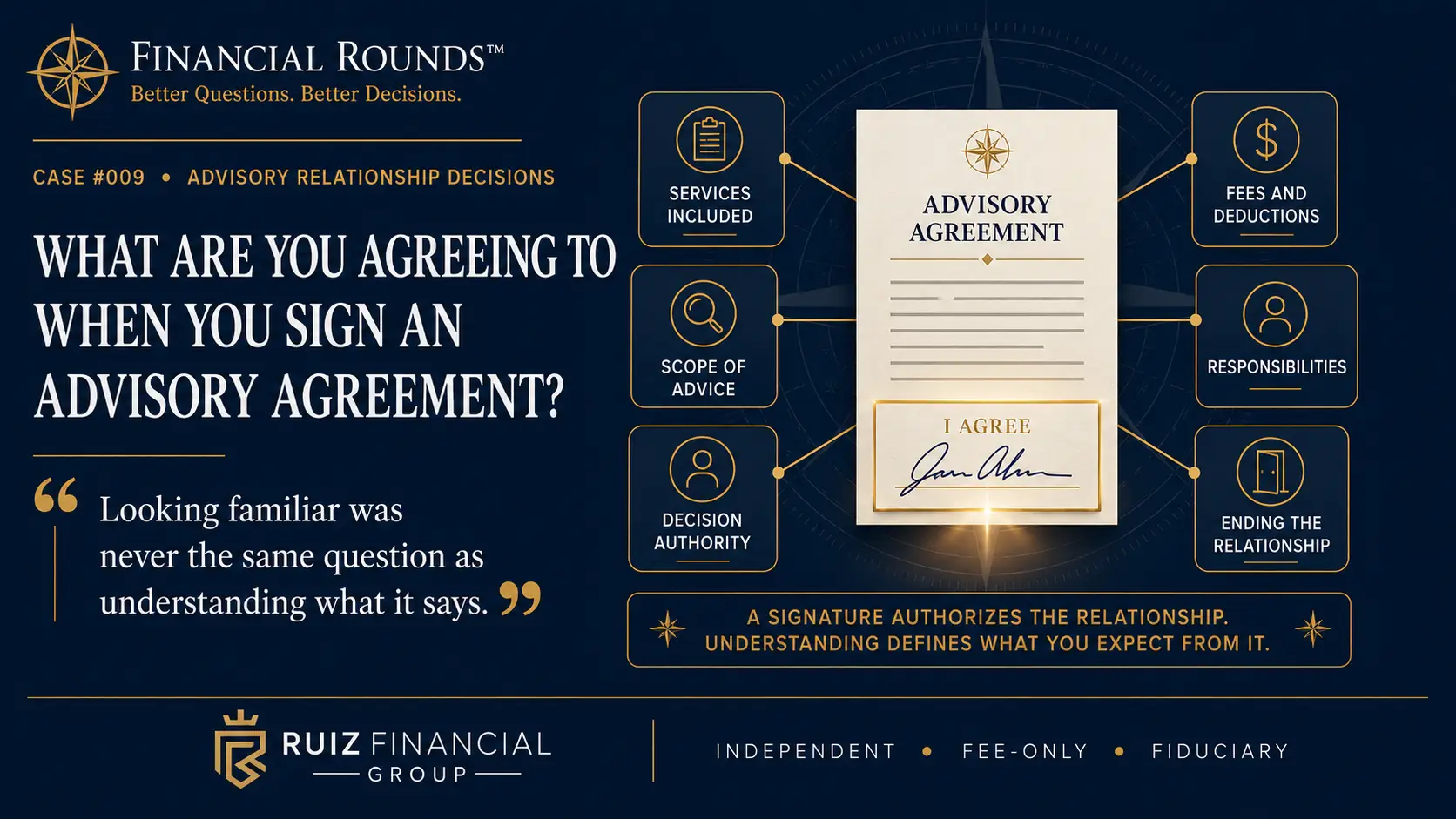
Case #009 • Advisory Relationship Decisions
Why This Matters
An advisory agreement usually arrives at the end of a process that already feels decided. Conversations have happened, questions have been answered, and a sense of trust has formed. By the time the agreement appears, it can feel like a formality rather than a document that deserves its own attention.The Diagnosis
The reasonable first question is:Does this agreement look standard?That question checks for familiarity. Standard formatting, familiar language, and terms that resemble other agreements can make the document seem unremarkable. That familiarity can feel like reassurance that the relationship itself is sound. Consider someone who reaches the agreement stage confident in the advisor and comfortable with the firm. The document looks professional, uses the language they expect, and nothing about it seems unusual. It gets signed the same day it arrives. The agreement may still describe an appropriate relationship. But if the reading stops at “this looks standard,” it can miss the content that defines how the relationship will operate: what services are included and which are not, how decisions get made, what authority is being granted, and what still depends on the client’s involvement. The problem is not that the agreement looks unfamiliar. It is that looking familiar was never the same question as understanding what it says. The better question is:
What relationship am I authorizing when I sign it?
The Treatment
An advisory agreement is the operating description of a relationship, not simply confirmation that one has already been established. Reading it well means looking at three areas. The first is what the advisor is agreeing to provide. Some agreements cover ongoing advice across several areas. Others are scoped more narrowly. Understanding the scope shapes what to expect afterward and what to clarify before the relationship begins. The second is what authority the agreement grants. This may include how investment decisions are made, whether the advisor can act without separate approval for each transaction, and how fees are calculated and deducted. These terms help define which decisions the advisor can make and which still require the client’s involvement. The third is how the relationship is structured and how it can end. Where assets are held, which responsibilities remain with each party, and what is required to terminate the relationship are all part of what is being agreed to, even though they may feel less immediate than the reasons someone sought advice in the first place. None of this requires reading the agreement like an attorney. It requires reading it like someone entering a relationship whose terms are worth knowing, not just its reputation.Practical Takeaways
- Treat an agreement that looks standard as a reason to read closely, not a reason to read quickly.
- Separate your confidence in the advisor from your understanding of the agreement.
- Note anything unclear and ask about it before signing rather than after something unexpected happens.
Bottom Line
An advisory agreement is not simply a document confirming that a relationship appears legitimate. It describes how that relationship is intended to work. Before signing, ask what you are agreeing to, not just whether the document looks like something you would expect to sign.What else does it touch?
Continue Learning
• Explore why a familiar label does not answer the whole question →
• See how to distinguish routine information from decisions that need attention →