

Case #007 • Organizing Financial Complexity
Why This Matters
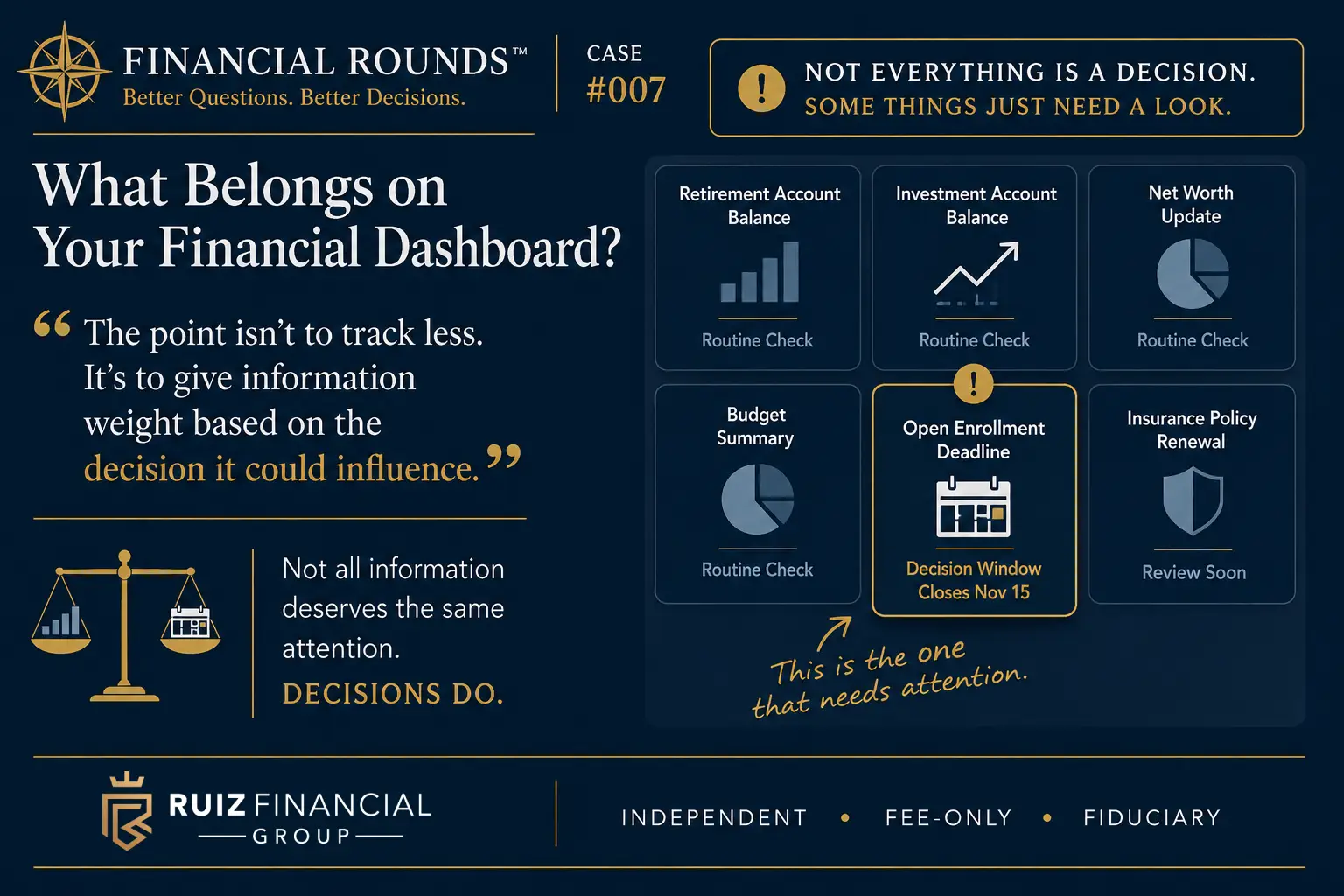
It’s easy to assume that better financial organization means tracking more: a net worth statement, a benefits portal, a budgeting app, investment account logins, and a spreadsheet updated every month. More visibility can feel like more control. But when every number receives equal attention, information that could change a decision can blend in with routine updates.The Diagnosis
The reasonable first question is:What financial information should I be tracking?That question assumes the goal is comprehensive visibility. Usually, it isn’t. Most account balances don’t need daily attention. Most benefits don’t change week to week. A dashboard designed to display every available number can give a routine balance the same weight as a decision with a deadline. Consider someone who regularly reviews retirement accounts, a budgeting app, and a net worth tracker. The information is visible. Everything appears current. Yet an open-enrollment window closes before a benefit election is reconsidered. The information was available. What was missing was a way to distinguish routine monitoring from a decision that required attention. The better question is:
Which information, if it changed, would actually change a decision?
The Treatment
Financial information deserves attention for different reasons. Some numbers are reviewed to confirm that nothing meaningful has changed. Other information warrants more attention because it could change a decision, carries a deadline, or affects another part of your financial life. A useful dashboard doesn’t need to reproduce your entire financial picture. It needs to distinguish what is stable from what is changing, and what is changing from what requires action. The point isn’t to track less. It’s to give information weight based on the decision it could influence, rather than simply because it is available.Practical Takeaways
- Separate what you review to confirm from what you review because a decision is approaching.
- Give deadlines, expiring options, and meaningful changes more attention than routine balances.
- Periodically ask whether a frequently checked number has recently changed a decision or has simply become familiar to monitor.
Bottom Line
More information doesn’t automatically create more clarity. A useful dashboard helps decisions that need attention stand apart from information being monitored routinely. Before deciding what deserves attention, identify the decision it could change and the connections that decision carries.What else does it touch?
Continue Learning
• Read another Financial Rounds™ case →
• Explore how to evaluate an opportunity before committing →